When Jason Perry was first elected as Croydon’s directly-elected Executive Mayor in 2022, he arrived as a fixer. Croydon was in crisis, its finances in special measures, its reputation battered. He governed cautiously, deliberately, like a man aware that one wrong move could tip the borough back over the edge.
His second term, which began after his re-election on 8 May 2026, has been something else entirely.
Perry won with 35,871 votes, narrowly beating Labour’s Rowenna Davis by 1,113 votes, and increasing his vote share on 2022. He took it not as a narrow escape, but as a vindication. As the council’s own newsroom put it, he was “back at his desk this morning, hitting the ground running” on a second term focused on “restoring financial stability and renewing pride across our borough.”
The Perry of term two is more confident, more visible, and far more comfortable using the levers of power — media, messaging, and development — to shape Croydon’s story.
1. New-Found Confidence
The clearest sign came at Annual Council on 27 May 2026, when Perry unveiled a new Cabinet and a punchy programme for his first 100 days, centred on a “cleaner, safer, greener borough that residents can be proud to call home.”
This was not the language of crisis management. It was the language of a mayor setting an agenda.
In his regular “listening to Croydon” columns, Perry has leaned into that tone: zero-tolerance on fly-tipping, graffiti and anti-social behaviour, pride in district centres, and a clear sense of priorities. “I made it clear that my administration will continue our zero-tolerance approach to flytipping, antisocial behaviour, graffiti, abandoned vehicles or any form of environmental crime,” he wrote after setting out his first 100 days.
Where first-term Perry often sounded like he was explaining Croydon’s problems to London, second-term Perry sounds like he is telling Croydon what it is going to become. He now governs a council under no overall control, yet he has projected authority as if he has a majority — appointing, announcing, and moving fast while opponents are still regrouping.
That confidence also shows in his willingness to pick fights upward. As Croydon’s voice on planning for London Councils, he has insisted the London Plan must be “grounded in the realities of local delivery,” positioning himself as the borough leader who will defend local character against top-down targets, including on Green Belt.
2. Clever Use of the Media
Perry’s second term has been a masterclass in mayoral communications — using the council’s own channels, local press, and set-piece announcements to control the narrative.
Rather than waiting for stories to find him, he has created them. The launch of the ‘ CRO-llywood’ Working Group is a perfect example. Announced at a conference at Croydon’s CEZ Creative Space on 2 June, it brought together industry leaders, education providers, creative businesses and production professionals to “turn Croydon’s filming success into jobs, skills, investment and opportunities for local people.”
It was catchy, visual, and instantly shareable — Croydon not as a bankrupt borough, but as a film set. It formed part of his first 100 days of action, giving journalists a positive, forward-looking hook in the crucial early weeks of the new term.
He has used the same playbook on culture. Backing “ Art On Our Doorstep” and festivals in district centres was framed not as a nicety, but as a core part of his vision for “a more vibrant borough” — a deliberate contrast to the image of a council that can only talk about cuts.
And he has kept a steady drumbeat of direct communication — mayoral columns, Cabinet announcements, site visits — that bypasses traditional opposition criticism and speaks directly to residents in plain, mayoral language. It is disciplined, on-message, and relentlessly local.
Critics have called it propaganda. Supporters call it what it is: a mayor who finally understands that in modern local government, if you don’t tell your story, someone else will tell it for you.
3. A Positive Relationship with Developers and House Builders
Perhaps the most important shift in Perry’s second term is his relationship with the development industry.
In his first term, Perry was defined in planning terms by what he stopped — revoking the Suburban Design Guide SPD2 in July 2022 to “stop over-intensification and protect local character.”
In his second term, he is defined by what he is trying to get built — and by a pragmatic, business-like partnership with developers and house builders.
The tone was set early with Regina Road in South Norwood. Final planning permission was granted for a redevelopment that will deliver “up to 340 safer and greener new homes including at least 215 new Council homes.” Perry presented it not as a developer win, but as a council win delivered with developers: new homes, new council homes, and regeneration for an area that had waited years.
The same approach is visible in his approach to developer contributions. His administration commissioned a full review of the Community Infrastructure Levy, introducing revised charges for residential development, student accommodation and care homes in Croydon town centre. The message to house builders is clear: Croydon is open for business, but developers must “pay their fair share towards Croydon’s future.”
That is a clever balance. To developers, Perry offers certainty, a design-led approach rather than a density-led free-for-all, and a mayor who will champion major schemes — including the town centre regeneration that could see thousands of new flats. To residents, he offers the reassurance that growth will fund infrastructure, not just profit.
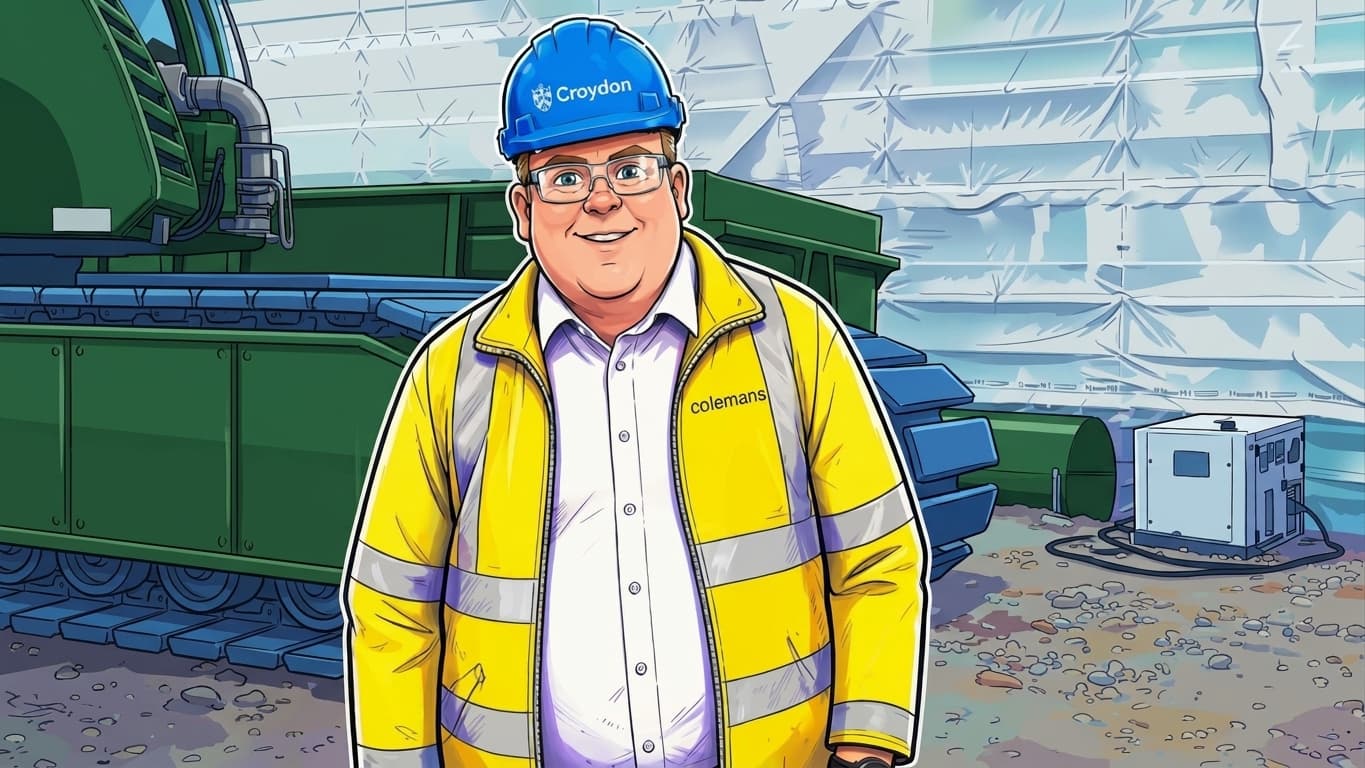
He has also been visible on site, not just in the Town Hall. His visit to Hyde Housing’s new affordable scheme in Waddon — 126 homes, including 70 for shared ownership and 56 for social rent, with community gardens and a play area — was classic second-term Perry: hard hat, handshake, and a clear signal that he sees house builders as partners in delivery, not adversaries.
The Mayor Croydon Now Has
First-term Perry stabilised Croydon. Second-term Perry is trying to sell Croydon — to investors, to developers, to filmmakers, and to its own residents.
He is more confident in the chamber, more assured in front of a camera, and more comfortable cutting deals that get homes built. Whether you see that as a mayor who has grown into the job, or a politician who has learned how to work the system, is a matter of perspective.
What is undeniable is the transformation in style: from caretaker to campaigner, from manager to mayor.
← Back to Council Watch