Earning trust before the decision: Terrapin's approach to consultation
From face-to-face meetings to creative local events, Terrapin explores how meaningful consultation builds trust and helps planning proposals address community concerns.
From 31 October 2026, the National Scheme of Delegation means far more planning applications will be decided by officers rather than by committee. Ward councillors can no longer call applications in. The new approach raises the stakes for everything that happens before an application is submitted.
Good public consultation is now one of the most effective ways to keep a scheme out of controversy. A project whose neighbours understand it, and whose concerns have been heard and answered, is less likely to generate the pressure that leads to a referral request. It also gives officers a clear record of local views to weigh and evidence that the applicant has taken the time to explain the proposal properly.
From standard newsletters, consultation websites and public exhibitions to novel ways to reach out to a community - this is how Terrapin approaches it.
Trust is built in person
The clearest example is the Raffles nightclub application on the King's Road in the Royal Borough of Kensington and Chelsea. Terrapin became involved after a previous scheme or the site had failed at RBKC’s planning committee. This time around it was granted consent with a unanimous vote in favour of the scheme. The chair of the Royal Borough's planning committee praised the consultation approach as “A model of how engagement can overcome fears and concerns”.
That outcome came from the groundwork. Terrapin met residents, ward councillors and officers, listened to what worried them, and explained how the impact would be managed. Reassurance counts for little unless people can ask questions face to face and see that their points have been taken seriously. By the time the application reached the decision-makers, the people most affected had already heard the case and had the chance to challenge it. Trust took time to win, and it was won through direct conversation.
Newsletters and Websites anyone can understand
Since Covid, most people take part in consultations on-line. This means that the project newsletters and website have to work for non-specialists. Terrapin writes in plain, non-technical language, explaining what is proposed, the reasoning behind a scheme and the benefits it will bring the locality. We avoid planning jargon or explain it where it cannot be avoided.
Good images and graphics do much of the work. A clear visual of the finished scheme, a simple plan showing what is changing, or a diagram of how construction will be phased tells people more than a page of text. If a resident cannot understand a website in a couple of minutes, they are more likely to assume the worst than to read the detail.
Planning a consultation timetable that ensures that everyone has ample opportunity to comment. While the ability to check and prove that newsletters have been delivered is another important requirement.
Exhibitions in the right place
A well-run public exhibition lets people see a scheme, speak to the team and leave comments on the spot. Choosing the venue matters. For most projects a local hall or recreational facility is the right answer: familiar, accessible and close to the site. Some schemes need more thought, and the best venue is wherever the people we want to reach already are.
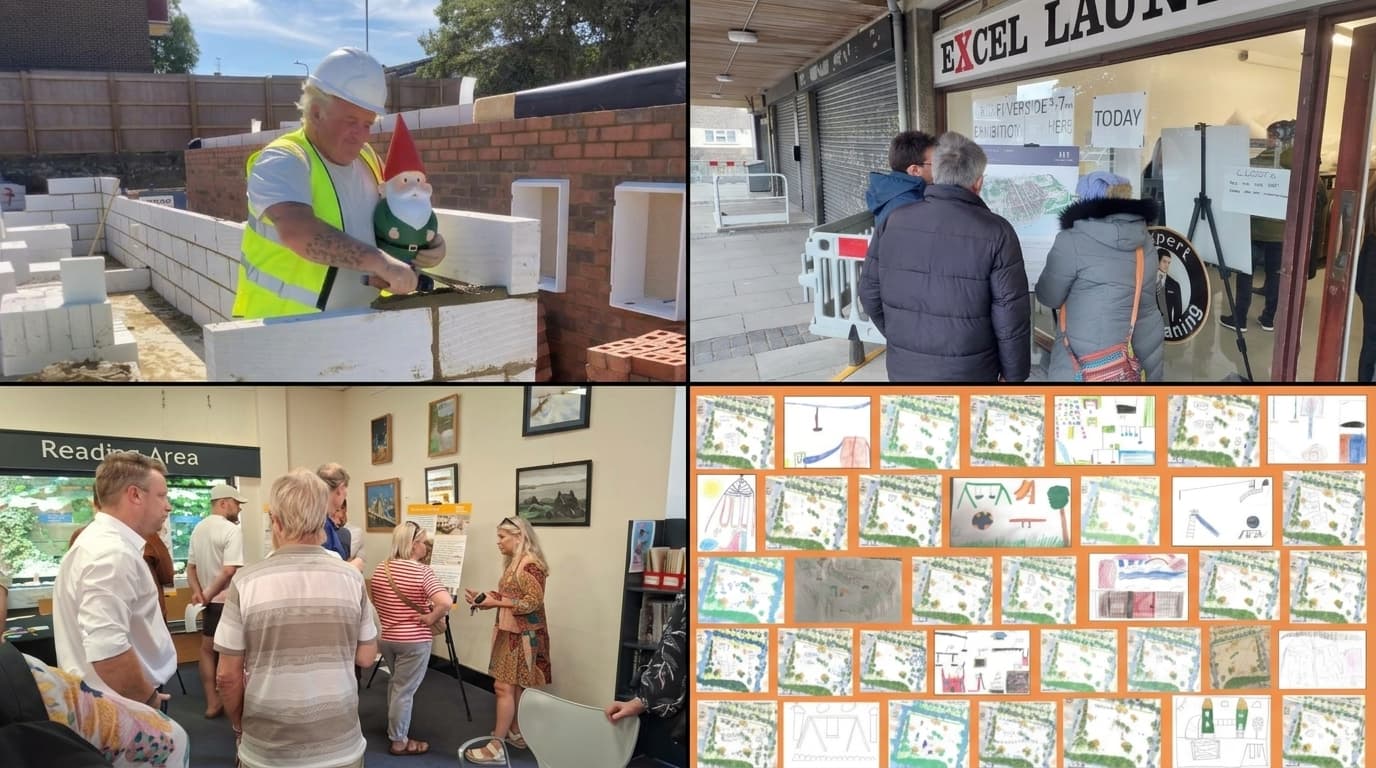
One more unusual example we used was an exhibition on a scheme situated next to a deprived council estate in North Kent, where it was difficult to engage with the local community. We chose the estate’s launderette as the venue, with residents giving feedback on tables located between the washing machines and the tumble dryers. The location drew praise from Ian Piper, then chief executive of the Ebbsfleet Development Corporation. His commented that it was an example of successful consultation because we “took the exhibition to the people rather than expecting the community to come to us”.
Engagement that need not be expensive
Consultation does not have to be costly to be effective. Some of the most valuable activity is simple, creative and brings the community together around a project. It’s about working out what will appeal to a community and encourage them to engage.
• Playground design competitions. In North Kent and Lewisham we invited local children to design a playground. As well their favourite play equipment, children were encouraged to think about the needs of their neighbourhood, with their families taking an interest as a result.
• Seminars on potential recreational facilities. In Croydon we ran seminars on potential art projects which a community centre could encourage. This enabled potential providers to explain their ideas to local groups and councillors ensuring good interaction between the two.
• Christmas tree or other relevant events. Where a community has broken down, these can encourage local people to come together to design how they would like to decorate their communities for festivities. These can be craft sessions for making decorations, planning how to put up fairy lights or street parties. They don’t have to be costly. Its about encouraging inclusion.
• Hampers for a primary school fayre. These don’t need to be from Fortnum and Mason. In fact, very often an upmarket hamper would fail to tick the wanted box and more down-to-earth products to down better. They need to be thought through with products the teacher would want children to eat and the ability to cook/prepare items whatever cooking facility is available in the home.
Such approaches give people something to take part in rather than something to react to. They enable a community to feel some ownership of scheme and begin to think through the benefits it will bring.
Jobs, skills and curiosity
Local authorities are often keen that large regeneration schemes encourage local people, especially the unemployed, to use local construction to create an opportunity for them. When Alan Milburn’s commission reports shortly it is likely that this will be encouraged even further. At Terrapin we’re keen on innovative approaches to whet people’s appetites.
• “I spy" sheets can invite children and families to spot the skills and trades at work on a site. Easy to produce, these can encourage people outside the site’s fencing to take an interest in the different skills being engaged and equipment being used. They can also include information sections such as where to go to find relevant training, or how to apply for a job.
• Norma and Norman, our site gnomes, are used to highlight trades and generate interest in them. Standing next to and theoretically watching a skill being carried, they are a lighthearted way to start a conversation about potential careers and next steps.
• STEM events in a library/community space often in school holidays. These don’t have to be complicated or expensive and can be aimed at any age group. They can explain what’s happening on the site or complications that are being overcome. Construction offers a wide range of opportunity from those who leave school without a qualification to recent university graduates. It’s about reaching the groups and opening their eyes.
Creativity and local understanding
None of this depends on large budgets. What matters is creativity and a real understanding of the community the project sits in: who lives there, where they gather, what they care about and what they are worried about. A launderette, a children's competition or a gnome will only work if it fits the place.
Going the extra mile tends to impress and bring dialogue. Good consultation with residents, community groups, councillors and officers is going to be even more important under the new delegation rules. With fewer chances for a public debate, early groundwork could well make the difference as to how easily a scheme will go through.
Key Takeaways
- Consultation should begin early and respond meaningfully to community concerns.
- Face-to-face conversations and accessible information help build trust.
- Creative engagement can reach people who may not attend conventional exhibitions.
- Terrapin’s project examples show how local knowledge can shape effective consultation.
Explore More Insights
Discover more articles on planning policy, community engagement, and the political landscape shaping development.