
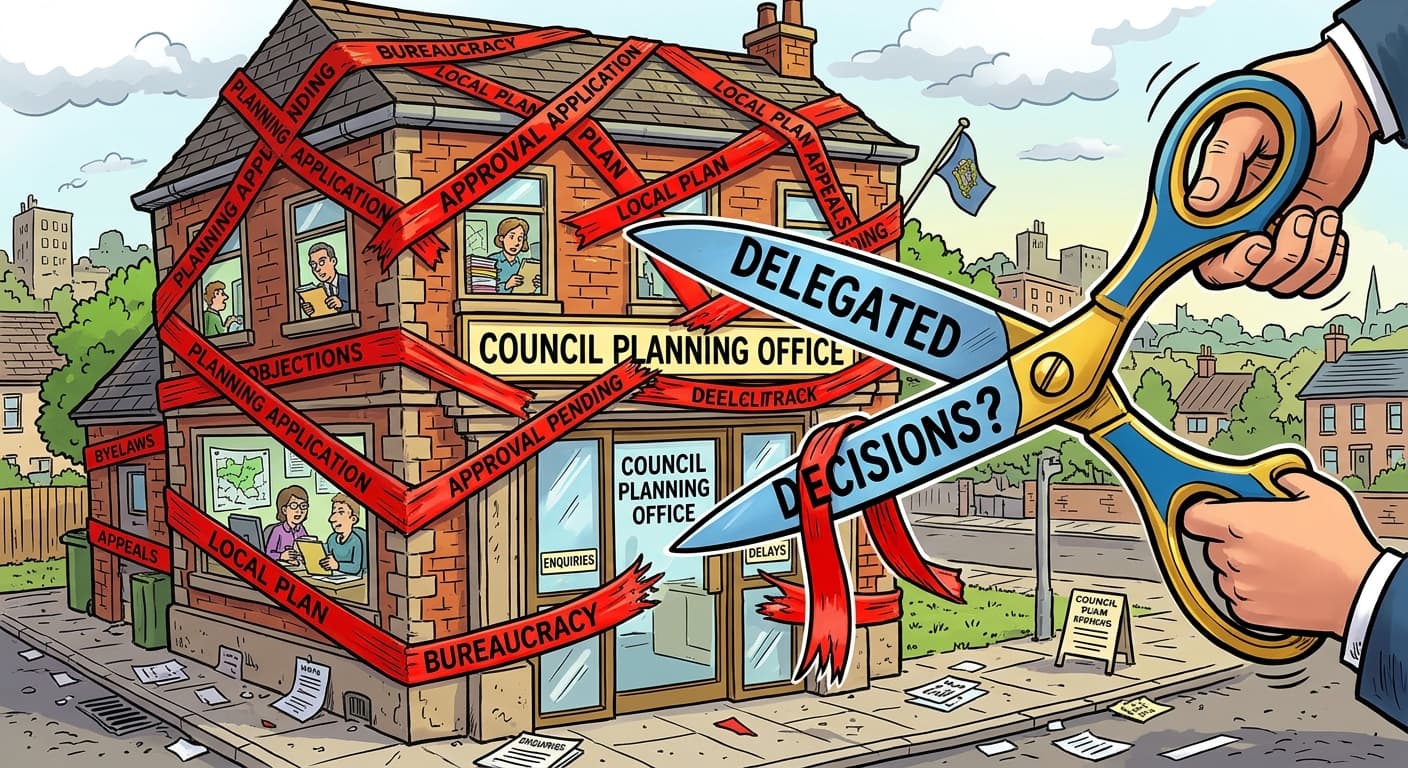
The art of public affairs in a world of delegated decisions
Under delegated planning decisions, effective public affairs starts earlier. Understanding officers, elected members, local communities and planning policy is now critical.
For years, public affairs on a planning application had a familiar centre of gravity: the committee. You identified the members, understood the politics of the chamber, briefed the ward councillors and prepared for a public vote. From 31 October 2026, under the National Scheme of Delegation, far more decisions are taken by officers. Ward members can no longer call applications in, and committee referral is the exception rather than the rule.
That does not make public affairs less important. It changes who matters, when they matter and what moves them.
How the new system works
Applications fall into two broad groups. Schedule 1 applications must be decided by officers, with no exceptions. Schedule 2 applications are presumed to be delegated, but can go to committee if the nominated officer, usually the Chief Planning Officer, and the nominated member, usually the committee chair, both agree. They must also be satisfied that at least one gateway test is met: that the application raises a significant planning matter in relation to the development plan and other material considerations, or a significant economic, social or environmental issue for the local area.
Government guidance says referral should be exceptional, not routine. If the two nominated people cannot agree, the application stays with officers. Councils are expected to keep a record of the cases considered and their reasons. Own-interest applications, where the council or one of its members or officers has an interest, are handled separately and can be referred in the interests of transparency.
This tells us where the real decisions now sit.
Know the players
The case officer. In most cases the person who writes the report is, in practice, the decision-maker. Their reading of policy, the weight they give to representations and the way they present the scheme will largely determine the outcome. Early, open, professional dialogue with the case officer is more valuable than ever.
The nominated officer. The Chief Planning Officer holds a pivotal role. They can decide whether an application is referred, and, when the nominated member disagrees, they hold the default position, because an unreferred application is decided by officers. Understanding their priorities, their approach to risk and their views on the gateway criteria is essential.
The nominated member. Typically the chair of the planning committee, this person has a veto on the officer's view in only one direction: they can stop a referral, but they cannot force one alone. Their concern will often be the council's reputation, public trust and the way a referral decision will look if challenged. Knowing their record and the local political context matters.
Ward councillors. Their role has changed from trigger to influencer. They can no longer call in an application, but they can speak to the case officer, to the nominated member and to the nominated officer, and they can argue that a scheme meets the gateway test. A ward member who has been briefed early, and who understands the scheme, will help shape the way the issues are framed.
Backbench councillors. Members who sit on neither the committee nor the cabinet may seem to have lost the most, but they remain important. They know their wards, they hear from residents first, and they can speak directly to the nominated member, who is often their own group colleague, and to the nominated officer. A backbencher who understands a scheme can explain why it matters locally, or why it does not raise a significant issue, in the terms the gateway test uses. A backbencher who first hears of it from a neighbour may simply oppose it. Brief them early, and treat them as allies in the process rather than an audience for the outcome.
Parish and town councils. They keep their statutory consultation rights. With fewer applications going to committee, their comments carry more weight, since they may be one of the few formal expressions of local opinion in front of the officer.
Technical consultees and internal specialists. Highways, conservation, environmental health, drainage and ecology officers can determine whether an application raises a significant planning matter. If their concerns are unresolved, they will feed directly into the officer's report and into any gateway discussion.
Residents and community groups. Organised, informed objectors remain influential. In a delegated system, a well-evidenced objection that identifies real planning issues will matter more than volume alone.
Know what will influence them
Policy, first and foremost. Officers are bound by the development plan and the NPPF unless material considerations indicate otherwise. A scheme that is clearly policy compliant, with a well-argued case, is in the strongest position. A scheme that depends on a difficult balance needs that balance set out with care.
Whether it passes the gateway. A scheme that raises a genuinely significant local issue is the likeliest to be referred. If you expect it to be, plan for committee. If you do not want it to be, address the issues that might cause the two nominated people to see it as significant before they ever consider it.
Risk. Councils care about appeal outcomes and the costs that can follow a refusal that does not stand up. A well-prepared, policy-grounded scheme makes it easier for officers to support approval and defend it later.
Evidence of local engagement. Good consultation gives officers a clear picture of what the community thinks and how the applicant has responded. It reduces the chance of surprises and helps show that concerns have been taken seriously.
Process and reputation. The gateway discussion is recorded. Both nominated individuals will be conscious that their decision, and their reasons, may be scrutinised. They will want to act consistently and defensibly.
Position the scheme politically
Delegation does not remove politics from planning. It means the politics shapes how a scheme is read before anyone decides. Councils will have priorities of their own, such as housing delivery, regeneration, jobs, affordable homes or protecting character, and different political groups will weigh them differently. A scheme positioned well shows how it serves the priorities of the people who will judge it, without taking sides in a party dispute.
That means understanding the council's political make-up, the leadership's stated aims and the issues residents are raising locally. It means presenting benefits in local terms and answering likely objections before they are made. Above all, it should be clear to officers, the nominated member and ward councillors alike that the scheme fits the development plan and can be defended in public. A scheme that does so is harder to caricature and easier to support.
The new craft
Public affairs in this system is quieter, earlier and more evidence-based. The skills that matter are:
• Mapping. Identify the case officer, nominated officer, nominated member, relevant technical consultees and local community voices before the application is submitted.
• Listening. Understand what each player will be worried about, and address it in the scheme and the submission.
• Briefing. Keep ward members, parish councils and community groups informed, so that nothing in the application comes as a surprise.
• Framing. Present the case in terms of the development plan, material considerations and local benefit, using the language officers and nominated members will use themselves.
• Trust. Build relationships on openness and reliability. In a smaller circle of decision-makers, credibility counts for a great deal.
The politics have not gone away. They have moved earlier, into the room where officers and a small number of people decide what happens next. The applicants who succeed will be those who understand that room and the people in it.
Key Takeaways
- Delegation makes early, policy-grounded dialogue more important than a last-minute committee campaign.
- Case officers, nominated officers and nominated members each have distinct roles.
- Ward councillors, technical consultees and local communities can still influence outcomes.
- Trust, stakeholder mapping and clear evidence of local benefit remain central to public affairs.
Explore More Insights
Discover more articles on planning policy, community engagement, and the political landscape shaping development.


